Tampilkan postingan dengan label Otsus. Tampilkan semua postingan

Rabu, 08 Oktober 2025

Cultural Festivals In West Papua Play A Significant Role In Fostering Social Cohesion


Illustration


1. Celebrating Diversity

West Papua is home to numerous indigenous groups, each with its own unique traditions, languages, and customs. Cultural festivals provide a platform for these diverse communities to showcase their heritage, fostering mutual respect and understanding among different groups. By celebrating this diversity, festivals create a sense of pride and belonging among participants.

2. Strengthening Community Bonds

Cultural festivals often involve local communities coming together to plan, organize, and participate in events. This collective effort strengthens community ties and encourages collaboration, helping to build trust and solidarity among residents. The shared experience of celebrating cultural heritage fosters a sense of unity that transcends individual differences.

3. Promoting Intergenerational Connections

Festivals often involve participants of all ages, from children to elders. This intergenerational participation allows for the transmission of cultural knowledge and traditions, strengthening family and community ties. Younger generations learn about their heritage, fostering a sense of identity and continuity that reinforces social cohesion.

4. Encouraging Dialogue and Understanding

Cultural festivals often include activities that promote dialogue and interaction among different ethnic groups, fostering understanding and reducing prejudices. Workshops, discussions, and collaborative performances encourage participants to engage with one another and learn about each other's cultures, helping to break down barriers and build relationships.

5. Enhancing Local Identity and Pride

By highlighting local traditions, crafts, and performances, cultural festivals instill a sense of pride in the community's identity. This pride can lead to greater social cohesion, as residents feel more connected to their cultural roots and to one another. A strong local identity can also enhance resilience against external pressures or conflicts.

6. Attracting Tourism and Economic Benefits

Cultural festivals can attract visitors from outside the region, bringing economic benefits that can be shared among local communities. This economic boost can foster cooperative efforts to enhance local infrastructure and services, further strengthening community ties. The shared experience of hosting and participating in these events can unite residents in common goals.


7. Fostering Peaceful Coexistence

In regions with historical tensions or conflicts, cultural festivals can serve as a peaceful platform for reconciliation and coexistence. By focusing on shared cultural heritage and common values, festivals can help to bridge divides and promote harmony among different groups, contributing to a more peaceful social environment.

8. Engaging Youth in Positive Activities

Cultural festivals provide opportunities for youth to engage in positive, constructive activities that foster a sense of belonging and community involvement. By participating in organizing or performing at festivals, young people can develop leadership skills, gain confidence, and build connections with their peers, reducing the likelihood of involvement in negative activities.

Conclusion

Cultural festivals in West Papua serve as vital instruments for promoting social cohesion by celebrating diversity, strengthening community bonds, and fostering dialogue among different ethnic groups. These events not only enhance local identity and pride but also create a sense of belonging that is essential for building a harmonious and united society. As West Papua continues to evolve, cultural festivals will remain an important avenue for reinforcing social ties and promoting understanding among its diverse populations.

Rabu, 15 Juni 2022

Foreign involvement in the conflict in Papua is Increasingly Visible


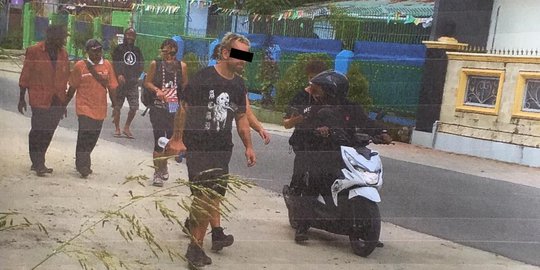
                                                    Photo: Merdeka.com

The National Police Chief of Indonesia once said emphatically that the ULMWP (United Liberation Movement for West Papua) and the KNPB (West Papua National Committee), in their actions mobilized students who were members of the AMP (Papuan Student Alliance), in further tracing the names Benny Wenda and Veronika Koman emerged.

Benny Wenda is a British citizen who lives in Oxford, England, while Veronika Koman is an Indonesian citizen currently in Australia. They are suspected of having networks with foreign parties, even on the Veronika Koman account, it proves that there is an inflow of funds from abroad and accounts outside Papua.

From some news and events, it is increasingly apparent that Benny Wenda, who now lives in Oxford, England, is increasingly visible.

With the separatist movements in Papua and West Papua, it was also revealed that Veronika's role was to send news and photos of events in Indonesia (such as events in Malang, Surabaya, and Papua) to Benny Wenda and foreign NGOs (Non-Government Organizations). With her network, Veronika has gone to Australia where her husband lives,

Through her social media accounts, Veronika is always active in spreading hoax news abroad in the hope that there will be several countries and foreign NGOs sympathetic to childish demonstrations, and also make it appear that Indonesia has committed human rights violations against Papuans. The East Java Regional Police have assigned Veronika Koman to the DPO (people in search).

It is undeniable that one of the small Pacific countries, Vanuatu, also very often voices its support for the OPM (Free Papua Organization) in international forums.

It is noted that since the New Order era of Indonesia, the country has consistently supported OPM, but other countries in the South Pacific, such as Papua New Guinea, Australia, and New Zealand, firmly reject and do not recognize the existence of OPM in their territory, they still maintain that Papua is the territory of the Republic of Indonesia.

The Papua New Guinea government has also said several times that it will not tolerate its territory as a hiding place or a base for OPM soldiers who fled when being chased by TNI officers.There were OPM soldiers who were later detained in the Papua New Guinea Detention Center, although they were released again after having their weapons confiscated.

Therefore, it has become increasingly clear that foreign parties, be it NGOs, individuals, or the Vanuatu State were the ones that mobilized anarchist demonstrations in Papua and West Papua some time ago.

They use racist issues to fry and mobilize people to carry out anarchist actions so that they do not hesitate to show resistance to the Police. With the hope of chaos and international attention, the world then called for a referendum for Papua.

Papuans do not support anarchist actions, they love peace and are proud to be part of Indonesia. It is foreign nations who have pitted the Papuans against each other because they have interests

However, hopes for a referendum seem to have vanished, because all people do not support anarchist actions that cost property, property, lives and of course harm the small Papuan community.

Finally, the Papuan people realize that they love peace and love the Republic of Indonesia, of course with the incident some time ago now the Papuan people must be carefull if they are going to hold a demonstration, not to be infiltrated bt foreign minions who deliberately sacrifice the community for the sake of those who are sitting pretty at abroad while watching the news about anarchist action in Papua.


Edward Krey

Papuan student living in Yogyakarta

Sabtu, 11 Juni 2022

Traditional Leaders in Papua Support the Sustainability of Special Autonomy


Traditional leaders in the coastal and mountainous areas of Papua asked the government to continue the special autonomy (special autonomy) in Cenderawasih Earth. Special autonomy is claimed to increase development in Papua.

Papua special autonomy is a special authority recognized and granted by the state, through Law number 21/2001.

So far, the special autonomy budget disbursed by the central government from 2000-2020 continues to increase and is focused on 4 priority programs, namely education, health, infrastructure, and community economic empowerment.

"Examples of the success of special autonomy in Papua have been many, such as in the field of education, there are thousands of indigenous Papuan children sent to schools abroad, whether sent to Australia, New Zealand, Germany, the Netherlands and America and various other countries – Papuan Ondonafi

Special autonomy also improves infrastructure, for example in transportation facilities in the land, sea and air transportation sector such as the construction of 6 airports in Papua Province, namely Ewer Airport, Kepi Airport, Ilaga Airport, Oksibil Airport to New Nabire Airport and Mopah Airport in Merauke, as well as airport improvements. Sentani.

The 1,071 kilometer Trans Papua road has been connected and its condition continues to be improved. Currently the Trans Papua road is asphalt along 743 kilometers and the rest is still hardening the ground.

The Trans Papua road has proven to be of benefit to the people's welfare with the lower prices of staple goods, due to road connectivity.

In order for its implementation to be more useful, special autonomy must be evaluated and continued, so that it can be felt by all Papuan people and generate prosperity for the community.

Balmino Enoch

Papuan People

Cultural Festivals In West Papua Play A Significant Role In Fostering Social Cohesion

  Illustration 1. Celebrating Diversity West Papua is home to numerous indigenous groups, each with its own unique traditions, languages,...